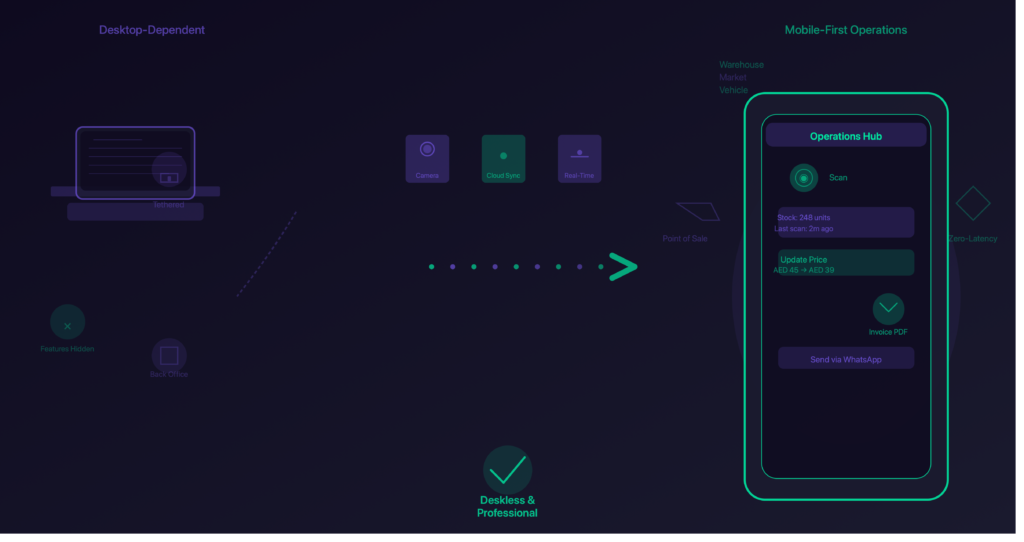
Anjiz keeps orders, customers, invoices, and expenses in one place, so nothing depends on remembering which conversation it was in.
This isn’t a failure of management. It’s what happens when tools that were never built for growth get used for it.
Excel has no live picture. When you sell something, you need to know immediately what that does to your stock and what you actually made after delivery costs and fees. Excel only tells you what you last typed into it, which means constant manual entry and figures that quietly drift from reality.
WhatsApp isn’t a record. Sending invoices as photos or text messages makes your business look improvised, and turns end-of-month reconciliation into an archaeology project.
The gap is between having a good product and having a system to run it. Most available tools sit at one extreme or the other — too basic to grow into, or built for companies with fifty staff.
What should I look for in a home business app?
Anjiz covers three of the four criteria below by design: full Arabic, mobile-first, and operations and money in one place.
Four things matter:
1. Proper Arabic, not a translation. Correct right-to-left layout, readable invoices, and interface language that matches how you actually speak about your business. Working in your own language genuinely reduces mistakes.
2. Money and operations together. Orders in one app and finances in another means entering everything twice. When an invoice is issued, the expense and the stock change should already be connected to it.
3. Built for a phone. You’re producing, packing, and delivering. If the app assumes you’re at a desk, you won’t keep using it.
4. Local fit. Currency, invoice format, and the way you actually get paid.
A note on task apps: Trello and ClickUp are powerful, but they’re built for teams working through task lists — not for one person managing a product from making it to getting paid for it. That’s a different shape of problem.
How do I move from a hobby to an organised business?
Anjiz lets you do these three steps in one place rather than assembling them from separate tools.
You don’t need to change how you work overnight. You need to digitise what you already do, in order:
1. Get your customers out of your phone contacts. Gather names, locations, and order preferences in one place. This is what lets you spot your repeat buyers instead of vaguely sensing who they are.
2. Send real invoices. Replace text messages with proper invoices that record whether they’re paid or pending. This saves time, and it changes how customers see you — a professional invoice signals an established business.
3. Track expenses against income. Knowing what came in isn’t enough. Materials, delivery, subscriptions — logged against the month or the project. This is what tells you whether you’re profitable or just busy.
Most home business owners do production and sales themselves, which is exactly why having the work and the numbers on one screen matters more here than it would in a company with separate roles.
Is Anjiz right for my home business?
Anjiz is built for one person running production and sales at once — inventory, invoicing, orders, customers, tasks, and expenses in one app, in Arabic, on your phone.
It’s a fit if you’re managing orders through DMs and want them somewhere searchable, if you want invoices that look professional without setting up accounting software, and if you want to see what you earned this week without exporting anything.
It’s not a fit if you need formal financial statements for an accountant or a bank. That’s dedicated accounting software, and it’s a genuinely different job.
Most home businesses need the first thing for years before they need the second.
Bottom line
Organisation isn’t the opposite of creativity — it’s what lets a good product survive its own growth. The tool matters less than picking one and staying with it, so choose the one you’ll actually still be using in three months.